The Roots: Chinatown-International District
The story of IDEC is inextricably linked to the history of Seattle's Chinatown-International District (CID). Originally tidal flats, the original Chinatown area was filled in and made artificially habitable by the city. This cheap land was populated largely by immigrants (and, contrary to popular belief, not just Asian immigrants). Throughout its history, the Chinatown community has faced repeated displacement. The original Chinatown was destroyed by fire twice—once by the mayor and again by angry Seattleites—forcing residents to rebuild further north.
During the Chinese Exclusion Act era, the community developed tight-knit support systems. The Kong Yick Building, constructed in 1910, stands as a testament to this period. 170 Chinese merchants banded together to form the Kong Yick Investment Company, Inc., a group who utilized legal loopholes to bypass racist Alien Land Laws and provided housing, commerce, and a ticketing agency for ships returning to Hong Kong. Today, their building is referred to as the West Kong Yick Building. The Yick Fung Company, a business owned by the Mar family, remained in the West Kong Yick Building until it was transferred to become an exhibit in the East Kong Yick Building attached to the Wing Luke Museum. Different groups in the CID had different forms of organization, such as Japanese kenjinkais, Filipino fraternal lodges, and Chinese family associations.
By the mid-20th century, the district was a vibrant, albeit marginalized, hub. It was a place where immigrants of all backgrounds—Chinese, Japanese, Filipino, Jewish, Latino, and more—lived together, creating a unique identity. However, systemic racism, redlining, and the construction of the I-5 freeway in the 1960s severed the community, isolating it and accelerating the decline of local services.
1968: The Birth of IDEC
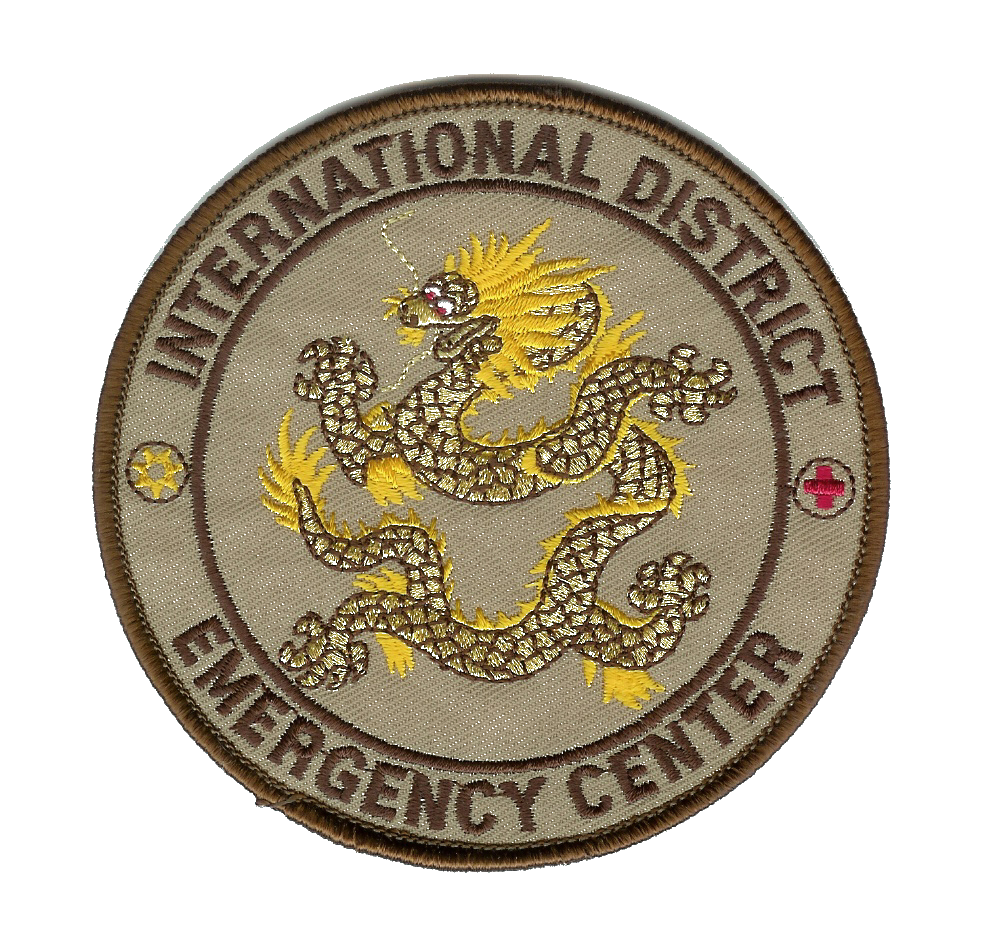
In 1968, frustrated by the slow response times of city emergency services in the CID and inspired by groups such as the Black Panthers, two community leaders decided to take matters into their own hands: Donnie Chin, a Seattle-born activist and Dean Wong, a photographer, who founded the International District Emergency Center (IDEC).
Donnie self-taught himself enough first aid to be offered jobs for the burgeoning Medic One initiative, patrolled the streets carrying medical gear in heavy suitcases, and tutored and mentored local youth, often referred to affectionately as "Donnie's Kids." He even refused a job as a firefighter because it would have taken him away from the CID; he believed his place was right there, among his neighbors.
IDEC is and has always been a volunteer-run organization, funded only by donations and a small city grant. It provided essential services that the city neglected: food banks, tutoring, and medical aid that got to the CID before official ambulances did. Being a part of the Chinatown community and culture made him a familiar face in the neighborhood.
"Especially for the elderly… it’s important to have responders that look like you, to help bridge the gap even if the language isn’t there." — Bernie Kay
2015: A Turning Point
Donnie Chin was tragically murdered in 2015 while responding to a call. His death highlighted the dangers faced by volunteer responders and spurred Seattle to upgrade emergency radio technology to include GPS pinpointing, a direct result of the tragedy.
Since Donnie's passing, IDEC has focused heavily on community resilience. Recognizing that in a major catastrophe (like the 6.8 Nisqually earthquake in 2001, where the only fatality was in the CID), the community cannot rely solely on external agencies, IDEC now trains residents to be their own first responders.
Preserving Identity in a Changing City
The history of IDEC is also a history of the fight to preserve the CID's identity. As the neighborhood faces gentrification, community leaders like Betty Lau and Sue May Eng have fought to ensure that the "Chinatown" name and its cultural heritage are not erased. Similarly, when disruptive projects threaten the district, people like Bob Santos, famous for the multicultural coalition known as the Gang of 4, rise to the occasion to protest.
The community has consistently organized to protect its people, its culture, and its history. The Drill Team founded by Ruby Chow in 1952, the ongoing efforts of the Chong Wah Benevolent Association and the Chinatown Chamber of Commerce, Jan Johnson and the Panama Hotel keeping Nikkei history alive, and the Friends of Little Saigon powering the social, economic, and cultural hub of the Seattle Vietnamese community are all examples of our community rising to the challenge to help each other. IDEC stands as a vital part of this ecosystem, providing the physical safety net that allows the community to thrive.
Today, IDEC continues Donnie Chin's vision: a neighborhood where everyone, regardless of language or background, has access to immediate, compassionate care.